
The Fences That Set Us Free
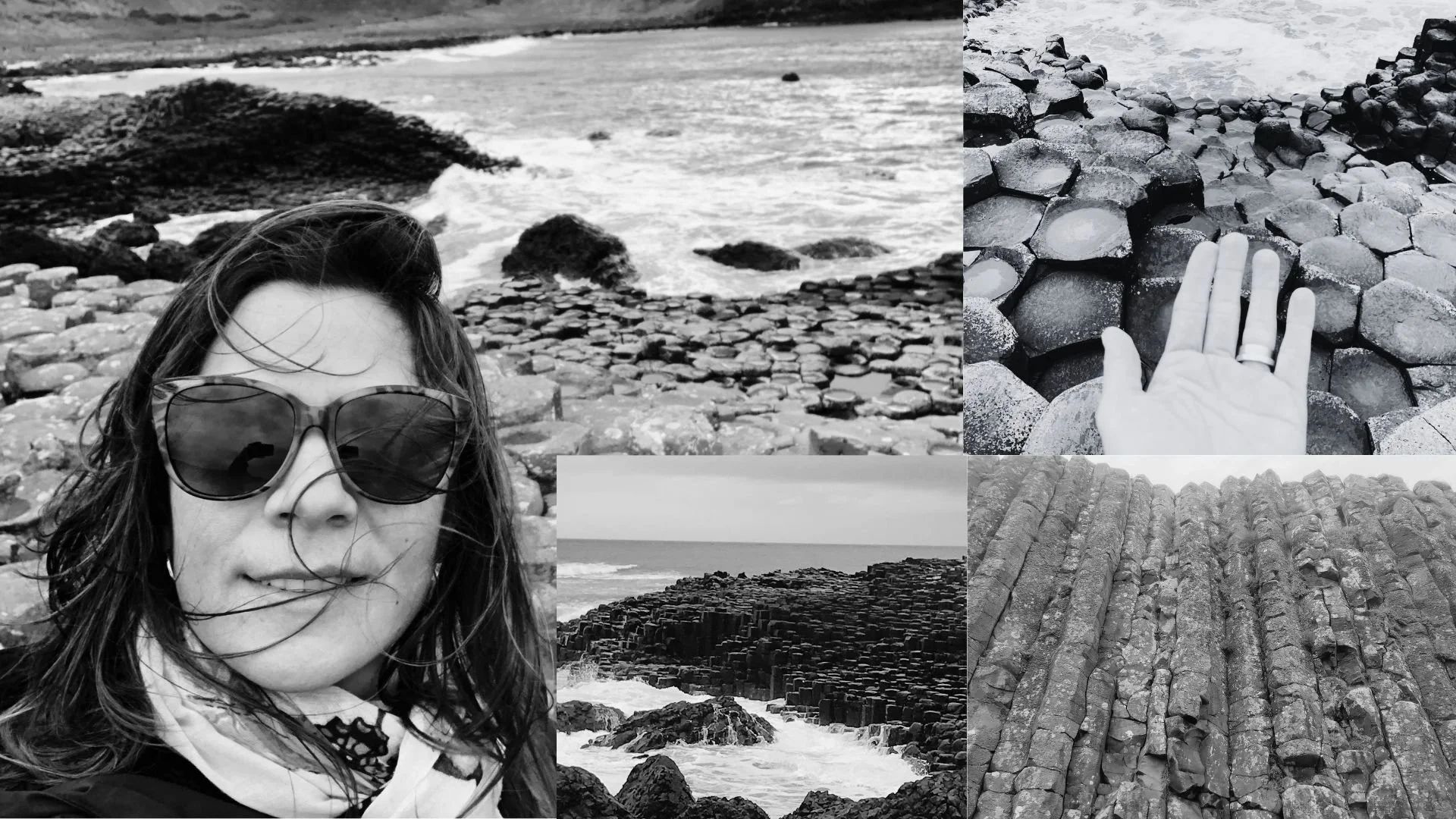
Giant Causeway Ireland. Photo credit: OSS.
Yesterday, I had a conversation about freedom with my 11-year-old son.
Although he didn’t know we were talking about freedom.
He just wanted to play.
He had gone for a bike ride around the neighborhood and to the park before his soccer game. And, like probably every kid his age, he wanted to squeeze every last minute out of playtime.
The problem was that his game was in another city. He knew that.
And he got home five minutes late.
Five minutes may not sound like much.
We got in the car, and I decided to use our 30-minute drive to talk about something that has been on my mind for years:
the relationship between discipline AND freedom.
My son wants to play, improve, be with his team, win games.
And he also wants to stay at the park playing with his neighborhood friends until the very last minute.
He wants both.
And I get it. So much.
The challenge is that he is still learning something many of us adults struggle with too:
Choosing something we want also means taking responsibility for that choice.
Playing soccer means showing up on time.
Being part of a team means other people are counting on you.
And sometimes it means walking away from something you’re enjoying in the moment to honor something else you also chose.
The paradox of freedom
As we drove, I remembered a metaphor by G.K. Chesterton that I learned from Dr. Arthur Brooks.
Imagine children playing soccer on top of a mountain.
There are cliffs all around them and no fences.
In theory, they have complete freedom.
But the children stay in the middle of the field, afraid to run too far or kick the ball too hard because it might go over the edge.
Then a fence is built.
A visible boundary is put in place.
And something fascinating happens:
Now the children run all over the field.
The fence that seemed to restrict their play is exactly what allows them to enjoy it.
Discipline works in much the same way.
Far from taking away our freedom, it is often what makes freedom possible.
Embracing the AND
And this is at the heart of my WHY and what I call embracing the AND.
We often find ourselves trapped in apparent either/or choices:
freedom OR discipline.
success OR fulfillment.
ambition OR well-being.
As if moving forward in one area always requires sacrificing the other.
But we can learn to hold the AND.
My son can enjoy his childhood AND learn to watch the clock.
He can love free play AND honor his commitments to his team.
He can want freedom AND value the structures that expand it rather than feeling that they take it away.
And we adults aren’t so different.
We want freedom too, yet sometimes we resist the habits, commitments, decisions, and boundaries that make the life we truly want to experience possible.
Embracing the AND doesn’t mean doing whatever we want, whenever we want.
It means reclaiming our agency to decide what we want to build and consciously choosing the boundaries that help make it possible.
When nature embraces the AND
As I was writing these words, another image came to mind.
One of the most breathtaking places I’ve ever visited: Giant’s Causeway in Northern Ireland, where I traveled in 2018.
Thousands of stone columns, most of them hexagonal, fit together with a precision that almost seems impossible.
Structure.
Order.
Discipline.
And right beside them, the Atlantic Ocean.
Vast. Free. Constantly moving. Crashing against those rocks again and again, surrounded by magnificent cliffs.
As I remembered that landscape, I thought there could hardly be a better image of this paradox.
The solidity of structure AND the force of freedom existing together in the same landscape.
Neither taking away from the beauty of the other.
Perhaps even becoming more beautiful precisely because they exist together.
And I realized that something similar is true for us.
We need space to explore, change, create, play, make mistakes, and choose our own path.
AND we need something solid enough to support that freedom:
our values,
our habits,
our commitments,
our consciously chosen boundaries.
Our own “hexagonal rocks.”
Growing up—whether at 11, 40, or 50—is, in large part, about learning to design our own fences.
Not so we can live more restricted lives.
But so we can run across the whole field.
✎ What discipline, habit, or boundary have you chosen in your life that gives you more freedom today?
